
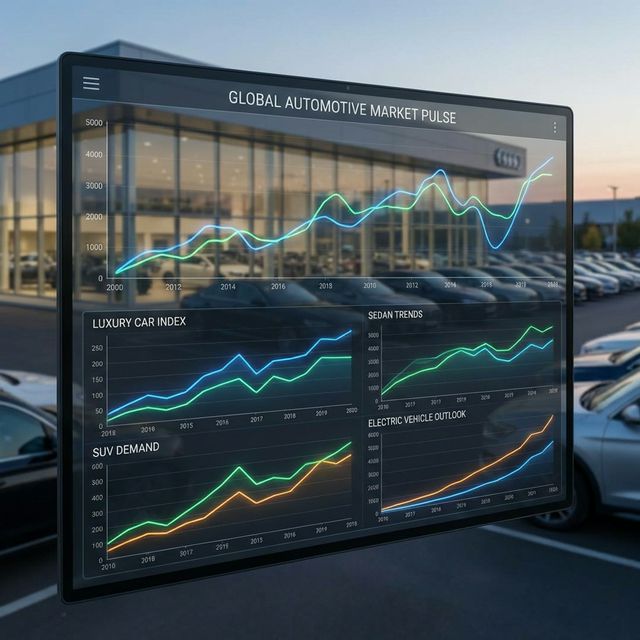
Current Used Car Market Trends
The most significant of the current used car market trends is the 'luxury correction.' High-end brands that spiked in value during the supply shortage are now seeing the fastest depreciation. We are seeing BMW and Mercedes models from 2021 and 2022 lose value at nearly double the traditional rate as buyers pivot toward fuel efficiency and lower insurance premiums.
Conversely, the sub-$20,000 market remains incredibly tight. Because new car MSRPs have climbed so high, the demand for affordable, reliable transportation hasn't wavered. If you are waiting for a crash in the price of a 5-year-old Toyota or Honda, you might be waiting a long time. According to Cars.com research, economy cars have held value better than any segment.
Market Segment Analysis
Different segments are showing vastly different dynamics. Understanding these patterns helps you time your purchase and identify the best value. The Edmunds Used Car Market Insights provide quarterly data on segment-specific depreciation trends.
| Segment | Current Trend | Best Value | Avoid |
|---|---|---|---|
| Luxury Sedans | Fast depreciation | 2020-2021 models | 2022-2023 nearly new |
| Mid-size SUVs | Oversupply | 3-4 year old | Brand new with markup |
| Compact Cars | Stable tight supply | Certified pre-owned | High mileage examples |
| Used EVs | Battery anxiety pricing | 1-2 year old | 3+ year old without battery warranty |
| Performance Cars | Cooling interest | 2018-2020 manuals | High-mileage AMGs |
Deep Dive Analysis
Our quarterly used car market analysis shows a growing divergence between internal combustion and electric values. Used EVs are currently the 'best value' on paper, offering high technology for a fraction of their original cost. However, the market is pricing in 'battery anxiety,' which keeps their resale values lower than comparable gas-powered cars. The IIHS provides safety ratings that can help evaluate used EV options.
For the average buyer, the 'sweet spot' for 2026 is the 3-to-4-year-old mid-size SUV. This segment is currently oversupplied, leading to increased dealer incentives and more room for negotiation at the closing table.
Why Prices Are Moving
Several factors drive the current market dynamics. First, the Federal Reserve's interest rate policy has made financing more expensive, reducing the pool of qualified buyers. Second, the massive wave of off-lease vehicles from 2021-2023 is hitting wholesale auctions, creating oversupply. Third, consumers are increasingly cautious about economic uncertainty. NADA reports show auction volumes up 23% year-over-year.
These factors combine to create a buyer's market for most segments, but the extent varies significantly by vehicle type and location.
| Factor | Impact on Prices | Outlook |
|---|---|---|
| High interest rates | Reduced buying power | Rates may stabilize |
| Lease returns flood | Oversupply in wholesale | Peaking now |
| Economic uncertainty | Buyers cautious | Gradual improvement |
| EV adoption | Used EV oversupply | Still declining |
| New car inventory | Normalizing | Stable |
Regional Price Variations
Geography plays a significant role in used car pricing. States with higher registration fees and emissions testing requirements typically have lower prices but more complicated purchasing processes. The Kelley Blue Book regional price index shows significant variation by metro area.
Regional preferences also matter: trucks command premiums in rural areas while EVs sell faster on the coasts.
| Region | Price vs National Avg | Notes |
|---|---|---|
| Northeast | -5% to -10% | Winter damage concerns, rust |
| Southeast | 0% to +5% | Hurricane history, flood damage |
| Midwest | -3% to 0% | Seasonal demand shifts |
| Southwest | +2% to +5% | Higher demand, fewer supply |
| West Coast | +5% to +15% | EV preference, stricter emissions |
Timing Your Purchase
While there is no perfect time to buy, certain patterns emerge throughout the year. January and February typically see lower demand as consumers recover from holiday spending. Dealerships are also more motivated to move year-old inventory. AutoTrader seasonal data supports this buying pattern.
However, the current market favors patient buyers who do their research. With ample inventory, there is less pressure to act quickly on any single listing.
| Month | Market Condition | Buyer Advantage |
|---|---|---|
| Jan-Feb | Post-holiday slowdown | Best negotiation room |
| Mar-May | Spring demand rises | Less leverage |
| Jun-Aug | Summer selling season | Prices stabilize |
| Sep-Dec | Year-end push | Year-end deals exist |
Our Verdict
The 2026 market favors informed buyers who do their homework. With more inventory and less frenzy, you have time to inspect vehicles properly and negotiate without pressure. The Car and Driver market reports confirm the shift toward buyer advantage across most segments.
The key is to know your segment: luxury cars offer the best deals, while economy cars remain stubbornly expensive. Focus on value where it exists, and do not overpay for 'reliability' when plenty of reliable options exist at fair prices.