
1. Der digitale Lebenszyklus: Vom Klemmbrett in die Datenbank
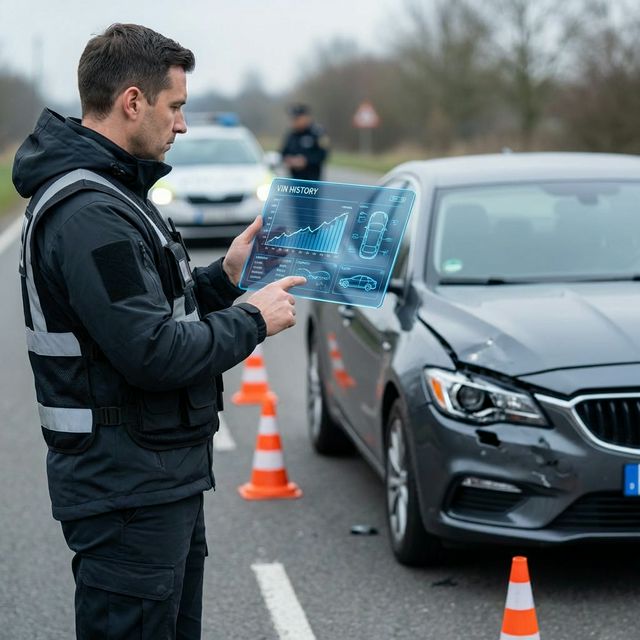
Wenn ein Polizeibeamter vor Ort einen car accident police report (ein Erstbericht zum Unfallhergang) erstellt, ist dies weit mehr als eine bürokratische Formalität. Dieser Bericht dient als autoritative Quelle für fast alle Fahrzeughistorien-Datenbanken. Sobald eine Tagebuchnummer vergeben wird, replizieren sich die Daten über die Server der lokalen Behörden hin zu zentralen Registern (wie dem KBA oder Versicherungs-Verbänden) und schließlich zu privaten Daten-Aggregatoren.
Der entscheidende Teil ist die Narrative. Beamte sind geschulte Beobachter, aber selten Kfz-Meister. Ein Bericht, der einen leichten Frontschaden vermerkt, kann in Wahrheit eine strukturelle Rahmenverziehung verbergen, deren fachgerechte Behebung 12.000 € kosten würde. Für den Zweitmarkt ist die reine Existenz eines car accident report ein Alarmsignal, völlig unabhängig von der subjektiven Schadenseinschätzung des Beamten vor Ort.
- Datenverzögerung: Es kann 30 bis 90 Tage dauern, bis ein lokaler Unfallbericht in einer kommerziellen VIN-Abfrage erscheint. Diese Geisterzeit nutzen unseriöse Verkäufer oft, um ein beschädigtes Auto schnell loszuwerden.
- Das Abschlepp-Signal: Wird im Bericht vermerkt, dass das Fahrzeug nicht mehr fahrbereit war und abgeschleppt wurde, ist dies ein Primärindikator für schwere mechanische Schäden.
- Airbag-Auslösung: Jede Erwähnung einer Airbag-Auslösung im car accident report ist de facto ein Todesurteil für den Wiederverkaufswert, da dies eine massive G-Kraft-Einwirkung belegt.
2. Der merkantile Minderwert: Die stille 20%-Steuer
Selbst wenn ein Fahrzeug nach Herstellervorgaben mit Originalteilen repariert wird, leidet es unter dem sogenannten 'merkantilen Minderwert'. Dies ist die Differenz zwischen dem Preis, den ein Käufer für ein unfallfreies Auto zahlen würde, und dem Preis für ein identisches Modell mit einem car accident police report in der Akte. Bei Premium-Marken wie BMW, Mercedes oder Tesla kann dieser 'Image-Abschlag' leicht 15-25 % des Gesamtwerts erreichen.
Versicherungen neigen dazu, diese Entschädigung nicht proaktiv anzubieten. Sie zahlen für das Metall, aber selten für den Vertrauensverlust des Marktes. Wenn Sie kaufen, müssen Sie den car accident report als schweres Verhandlungsinstrument nutzen. Ein 40.000 € SUV mit einem Parkrempler in der Historie ist auf dem freien Markt kein 40.000 € Auto mehr; es ist ein 34.000 € Auto, das nur noch so aussieht.
3. Die Cash-Reparatur entlarven
Die risikoreichsten Fahrzeuge sind nicht diejenigen mit einem car accident report – sondern diejenigen, die einen haben SOLLTEN, aber keinen haben. Um ein Auto professionell zu prüfen, muss man nach der physischen Geschichte suchen, die der Verkäufer zu verbergen versucht. Dies geschieht oft bei Alleinunfällen (z. B. Kollision mit einem Poller), bei denen der Besitzer die Reparatur bar bezahlt, um Versicherungs-Rückstufungen und Akteneinträge zu vermeiden.
Um diese zu identifizieren, müssen Sie zum Forensiker werden. Suchen Sie nach Sprühnebel (Overspray) an Gummidichtungen, nach Werkzeugspuren an Kotflügelschrauben im Motorraum und nach unterschiedlichen Orangenhaut-Strukturen im Lack. Eine professionelle Reparatur sieht für das Laienauge perfekt aus, aber der fehlende car accident police report in der Akte täuscht oft über einen strukturell kompromittierten Rahmen hinweg.
4. Das Phänomen der Verwaltungs-Geister
In jahrelanger Datenanalyse habe ich ein Phänomen beobachtet, das ich Administrative Geister nenne. Dabei existiert ein car accident report zwar bei der lokalen Polizeidienststelle, wurde aber aufgrund von Systemfehlern oder manueller Erfassung niemals in die zentralen digitalen Versicherungsdatenströme übertragen.
Ein wirklich gewissenhafter Käufer verlässt sich nicht nur auf digitale Portale. Wenn die Historie bei einem Fahrzeug mit hoher Laufleistung zu sauber wirkt, lohnt sich oft eine Nachfrage bei der lokalen Behörde am langjährigen Einsatzort des Wagens. Dieser zusätzliche Schritt kann einen car accident police report ans Licht bringen, den der digitale Markt vergessen hat.
5. Chancen im Unfallwagen-Markt
Lohnt es sich überhaupt, ein Auto mit einem car accident report zu kaufen? Ja, wenn der Preis das Risiko widerspiegelt und der Schaden rein kosmetisch war. Der Sweet Spot liegt darin, Fahrzeuge zu finden, bei denen der Polizeibericht durch ein Bagatellereignis ausgelöst wurde (wie ein leichter Kratzer beim Ausparken), das aber 90 % der anderen Käufer abgeschreckt hat.
Indem Sie datengestützte Werkzeuge nutzen, um das Berichtsdatum mit der Rechnungshistorie der Werkstatt abzugleichen, können Sie verifizieren, ob der 'Schaden' tatsächlich die Langlebigkeit gefährdet. Wir bei Autoscore liefern Ihnen die prädiktiven Daten, um zwischen einem 'unheimlichen Akteneintrag' und einer tatsächlichen 'Gefahr auf Rädern' zu unterscheiden.
| Berichts-Typ | Wertverlust-Indikatoren | Mechanisches Risiko | Empfohlene Aktion |
|---|---|---|---|
| Kosmetischer Bericht | -10% bis -15% | Gering (Lack/Plastik) | Lacktiefe prüfen; Rabatt fordern. |
| Technischer Defekt/Abschleppfall | -20% bis -35% | Hoch (Motor/Rahmen) | Zwingend Hebebühne; Spur vermessen. |
| Airbag/Totalschaden | -40% bis -60% | Kritisch (Elektronik/Struktur) | Meiden; nur für Teilespender. |
| Die 'saubere' Unfall-Historie | 0% (Bis Entdeckung) | Extrem (Verschwiegener Schaden) | Suche nach Overspray und Werkzeugspuren. |