
The Original: E53 Generation (1999–2006)
The E53 was BMW's first SUV and shares much of its DNA with the legendary E39 5 Series. It offers a pure driving experience but is now firmly in the 'high-maintenance classic' territory. Buying one today requires a significant budget for preventative maintenance. BMW Group historical archives document the engineering decisions of this era.
Major issues include the cooling system, front suspension components, and the automatic transmissions on early V8 models. Rust is also becoming a concern on vehicles from colder climates.
- Check for pixel failure in the instrument cluster.
- Inspect the cooling system (expansion tank, radiator, hoses).
- Verify all window regulators are functional.
The Technical Leap: E70 Generation (2007–2013)
The E70 introduced the iDrive system and much more complex electronics. It is more refined than the E53 but significantly more expensive to repair when things go wrong. The N63 V8 engine in this generation is notorious for valve stem seal failures and oil consumption.
For buyers prioritizing reliability, the naturally aspirated inline-6 (N52) or the M57 diesel engine are the preferred choices, though the diesel requires specific attention to the emissions system.
- Avoid early N63 V8 models without 'Customer Care Package' proof.
- Test the electronic parking brake for smooth operation.
- Check for water ingress in the rear cargo area (sunroof drains).
The Modern Benchmark: F15 Generation (2014–2018)
The F15 generation refined the X5 into a much more comfortable and tech-focused vehicle. It is generally more reliable than the E70, particularly in 35i trim with the N55 engine. This generation also introduced the xDrive40e plug-in hybrid.
Common issues include air suspension leaks (if equipped) and early wear on the front control arm bushings due to the vehicle's weight. The interior plastics are also prone to peeling on high-use buttons.
- Inspect rear air bags for sagging after sitting overnight.
- Check for oil leaks from the oil filter housing and oil pan.
- Verify the functioning of the power tailgate and soft-close doors.
The Current King: G05 Generation (2019–Present)
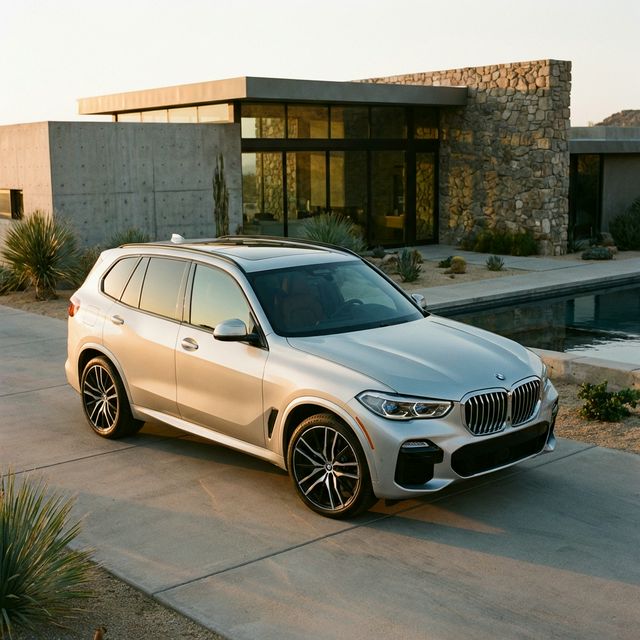
The G05 is arguably the most reliable X5 since the original, thanks to the robust B58 (6-cylinder) and N63TU3 (V8) engines. The interior technology is world-class, but the increased complexity makes an extended warranty a wise consideration.
Keep an eye on the sophisticated driver assistance systems and the transfer case. Some users have reported 'stuttering' during tight turns, often solved by a fluid change or software update.
- Coolant loss from the expansion tank is a known early issue.
- Verify all software updates have been performed for the iDrive 7/8 system.
- Test the active cruise control and lane-keeping features.